IndexFiguresTables |
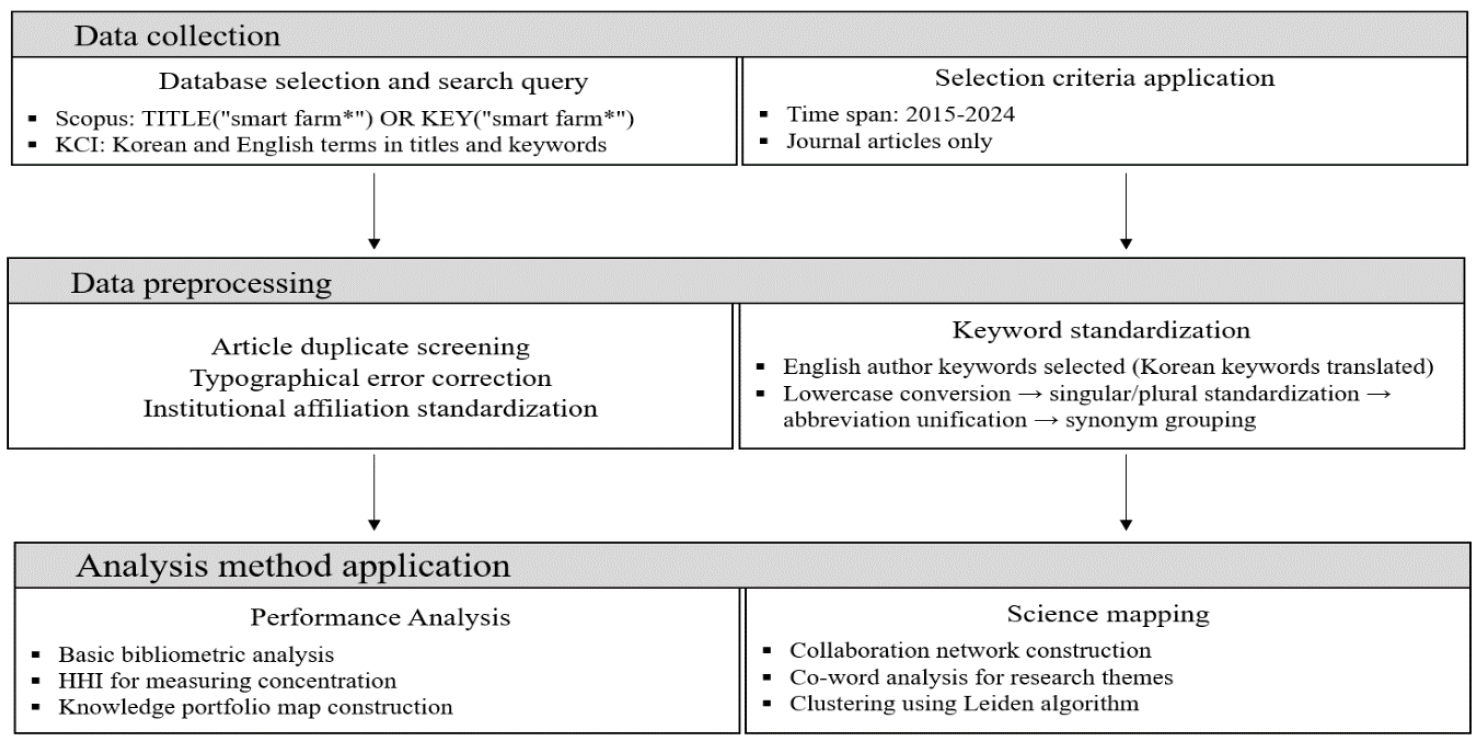
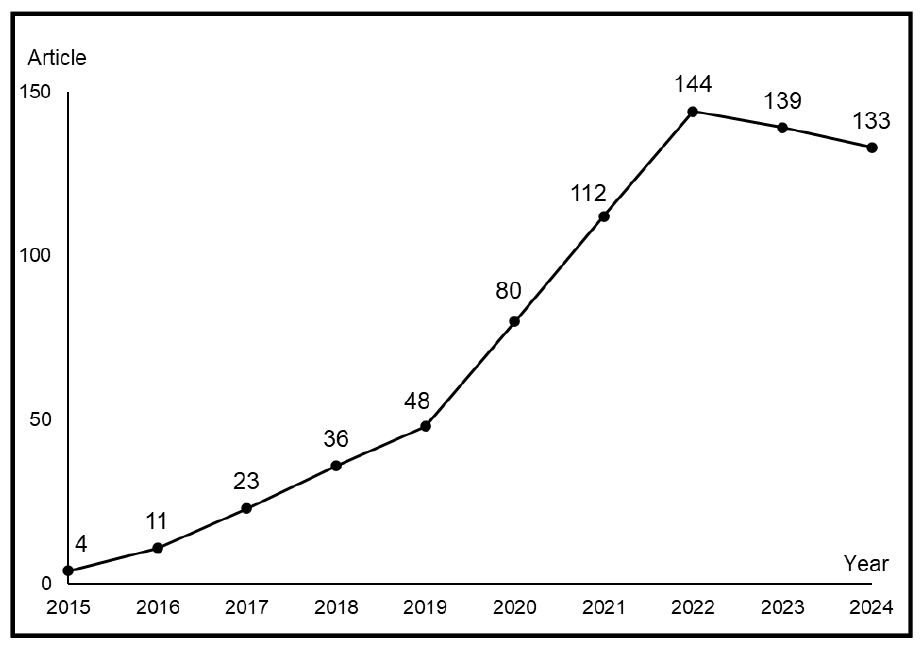
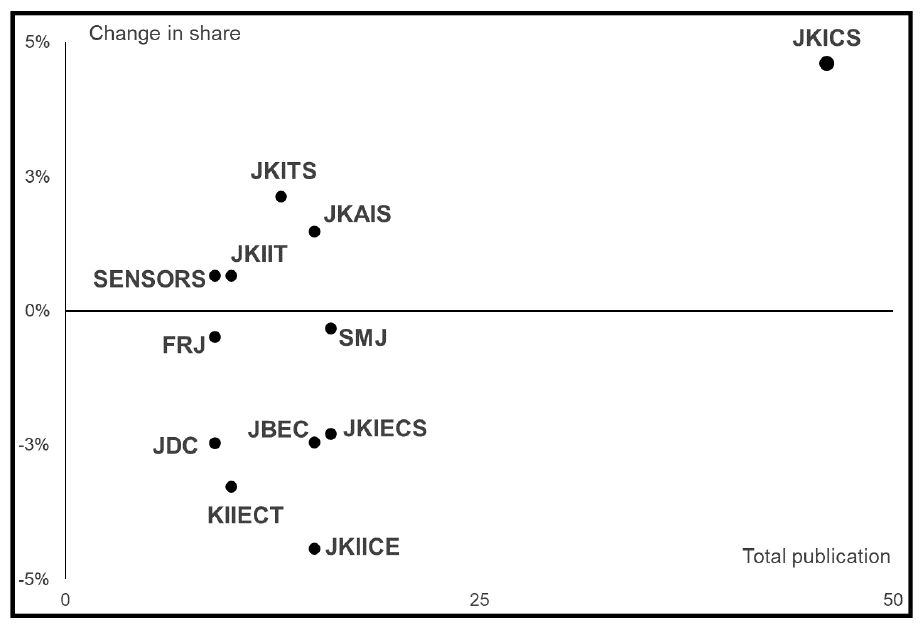
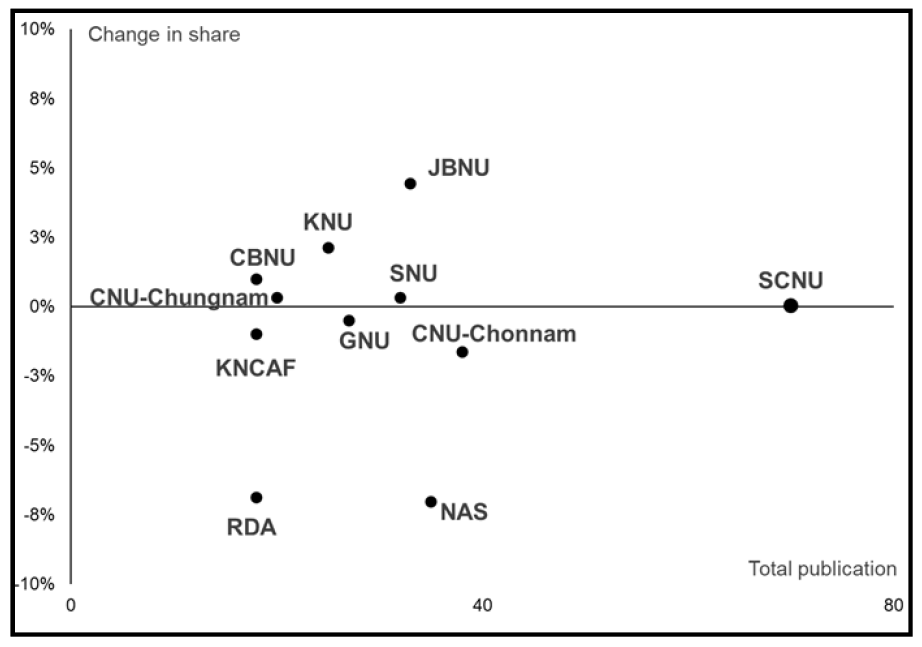
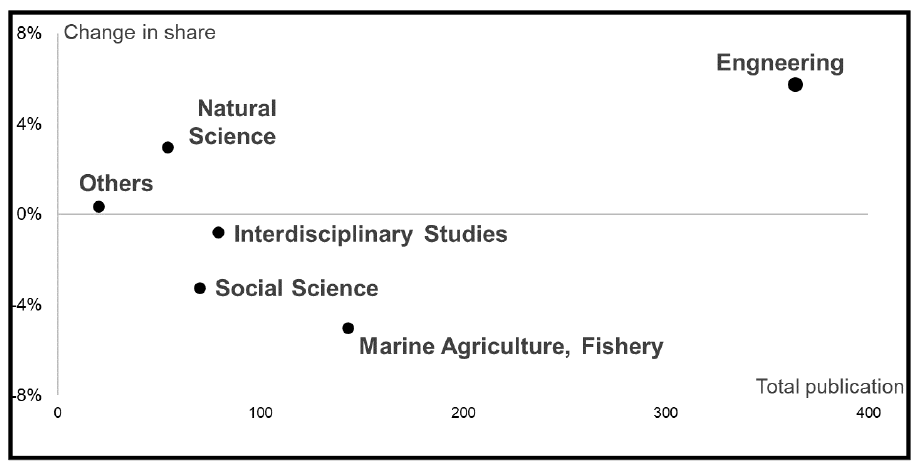
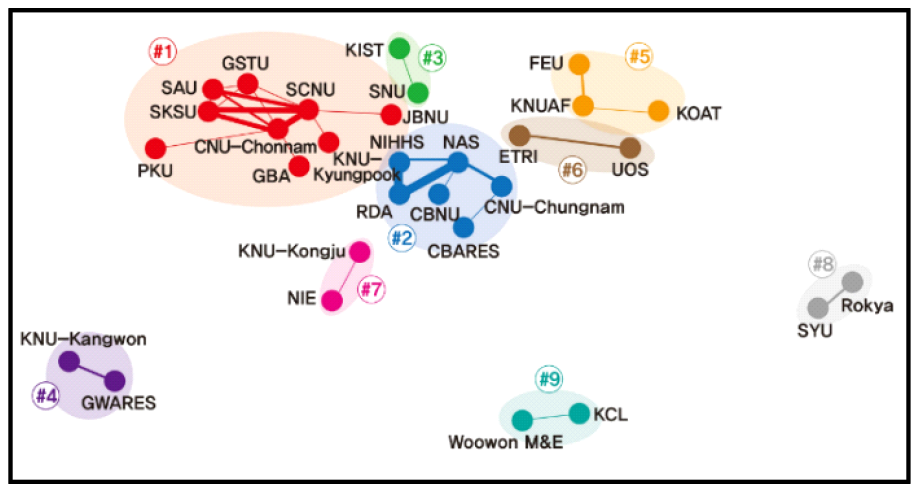
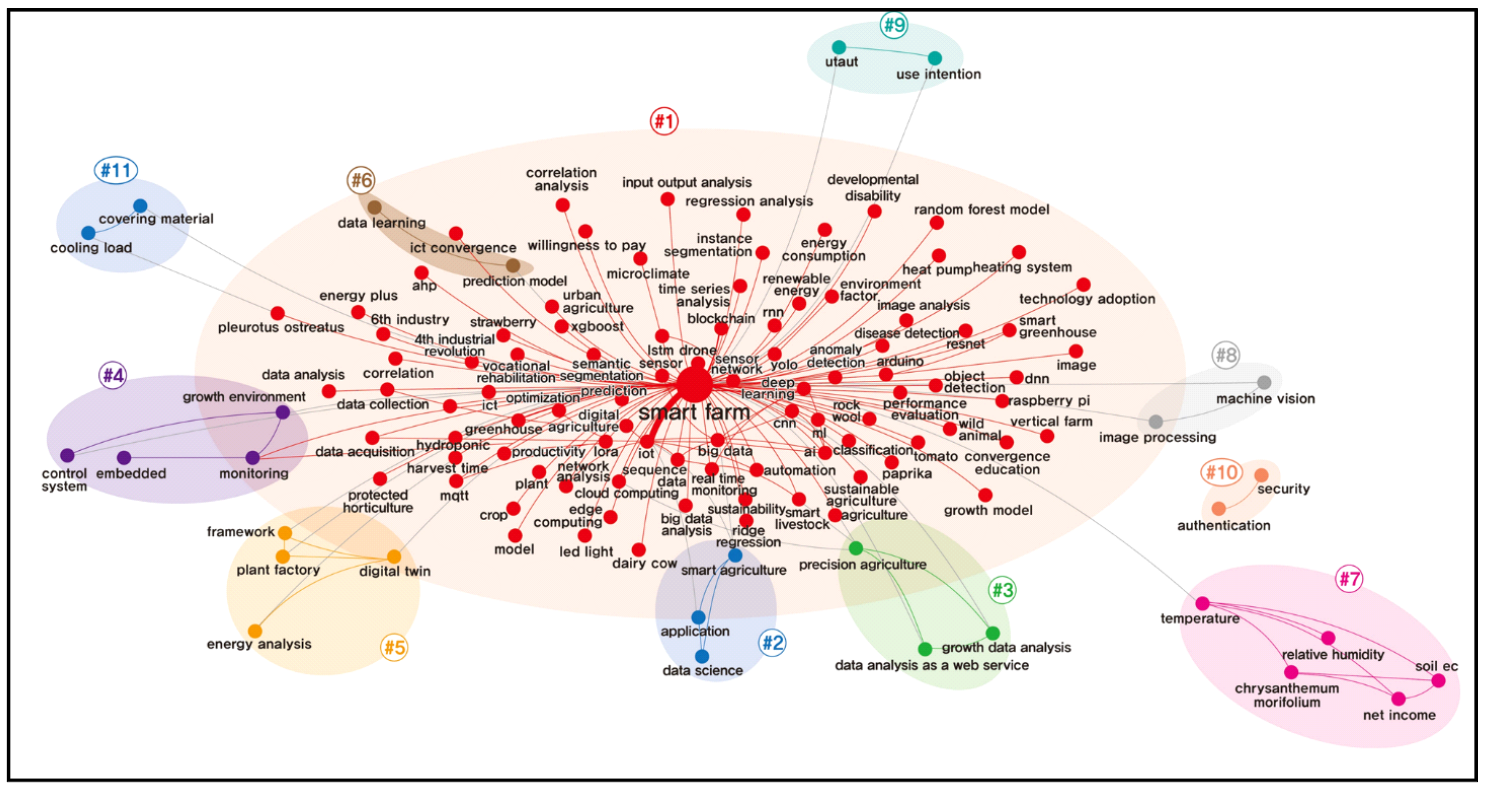
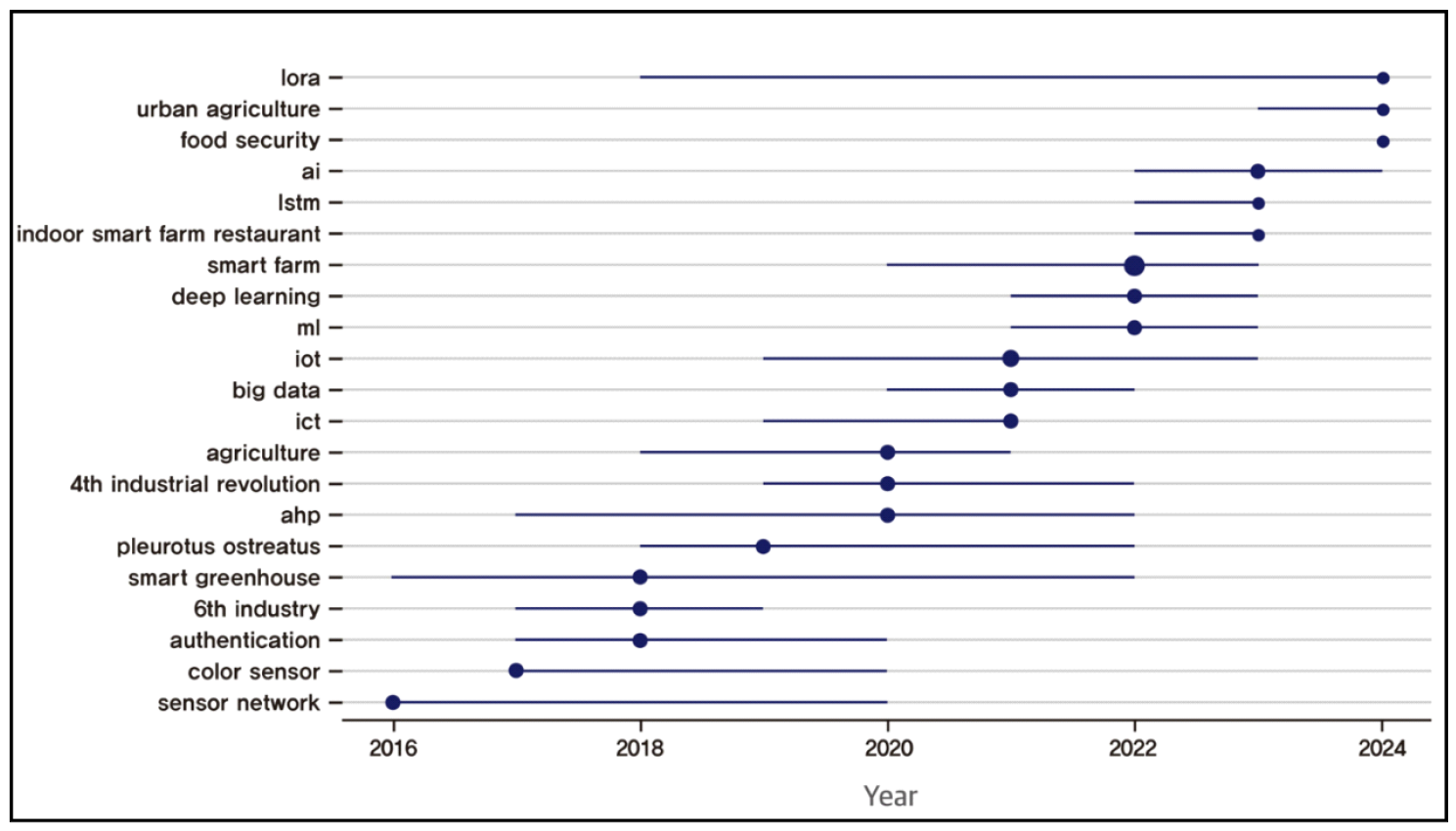
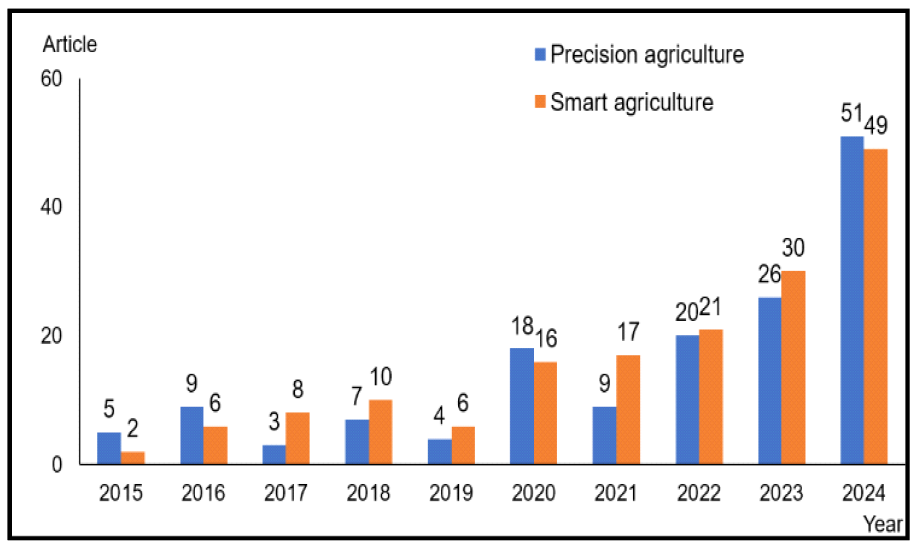
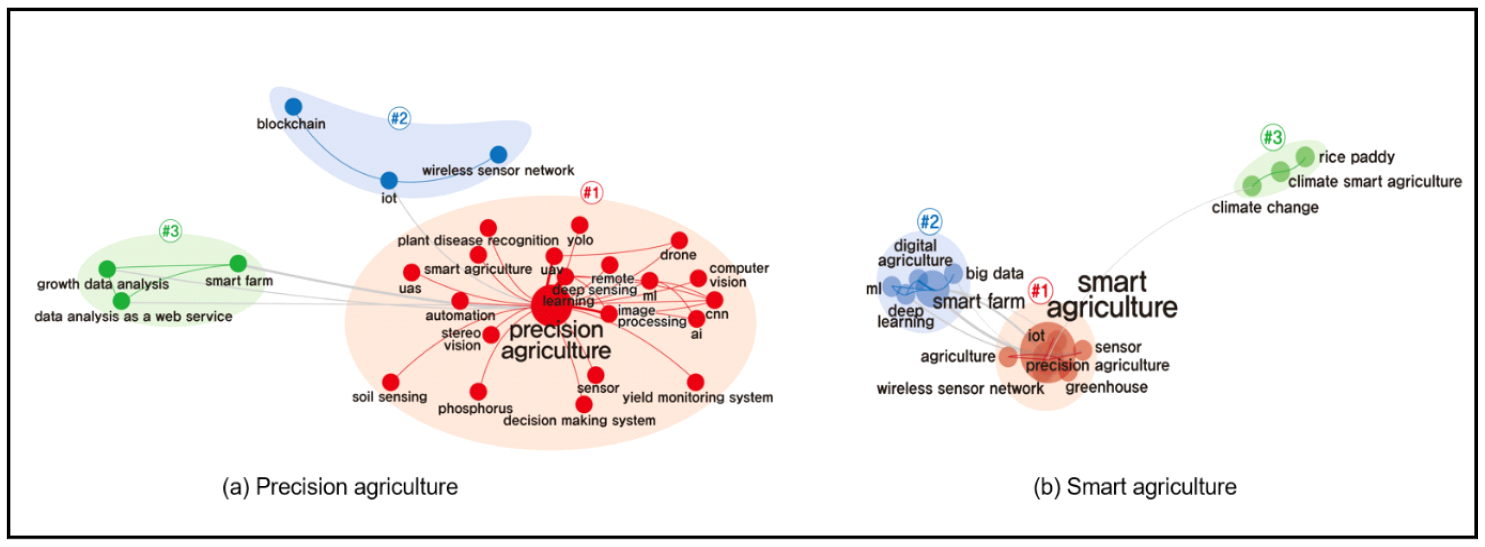
Moon-Koo Kim♦, Byoung-Chang Choi*, Young Wook Seo°Smart Farm Research in Korea (2015-2024): Trends and Thematic Evolution from an Engineering and ICT-Centered PerspectiveAbstract: This study used bibliometric methods to analyze Korean smart farm research from 2015-2024, examining 730 articles across two periods: 2015-2019 and 2020-2024. Korean smart farm research showed rapid growth with a 47.8% compound annual growth rate. Engineering dominated with 49.9% of publications, while IT-related journals comprised 66.7% of top journals, confirming its technology-focused and engineering-driven nature. Regional flagship national universities led research as central hubs, with growing industry-academia-research collaborations. Keyword analysis revealed explosive growth in AI-related terms including AI, Deep Learning, and Machine Learning, confirming AI technology's expanding influence. Thematic cluster analysis identified 11 research clusters within an integrated smart farm technology ecosystem, including precision agriculture, environmental monitoring, next-generation facilities, and predictive analytics. Thematic evolution showed a paradigm shift from Period 1's basic hardware and ICT convergence focus to Period 2's emphasis on AI-based applications, technology commercialization, urban agriculture, food security, and social problem-solving. The study recommends strengthening industry-academia-research ecosystems, expanding international cooperation, advancing AI-based convergence research, and expanding technology acceptance and commercialization research to activate Korean smart farm research. Keywords: Smart farm , Research trends , Thematic evolution , Intellectual structure , Temporal comparison Ⅰ. IntroductionSmart farm refers to controlled agricultural environments, including greenhouses, livestock facilities, plant factories, and vertical farms, that utilize information and communication technology (ICT) to remotely and automatically manage the growing environments of crops and livestock[1]. This technology is recognized as an innovative approach that applies automatic control, sensing, and communication technologies to agriculture to create high value-added solutions, and is classified as a branch of smart agriculture that encompasses precision agriculture and digital agriculture[2]. Smart farm presents a new agricultural paradigm that maximizes productivity and resource efficiency by applying cutting-edge technologies such as the Internet of Things (IoT), Big Data, and Artificial Intelligence (AI) to controlled agricultural environments[3]. The importance of smart farm has been highlighted as a solution to various crisis situations, including global food security issues, climate change, and domestic agricultural challenges such as population aging and labor shortages[4]. Korea, in particular, faces an urgent need for smart farm adoption due to limited arable land, low food self-sufficiency rates, and rapid aging of the rural population. Smart farm is recognized as an important means to overcome these agricultural crises, increase productivity, and secure agricultural sustainability[5,6]. Accordingly, the Korean government actively supports the activation of domestic smart agriculture and overseas expansion through smart agriculture promotion and support policies[7]. The characteristics of smart farm stem from the active application of advanced technologies. This includes the capability of real-time monitoring and control various environmental factors necessary for crop growth by applying cutting-edge technologies such as IoT, Big Data, and AI to controlled agricultural environments[8,9]. In particular, AI-based Deep Learning algorithms perform functions such as early detection of pests and diseases, crop growth and yield prediction, and resource optimization, thereby maximizing agricultural efficiency[9,10]. Furthermore, generative AI technology analyzes and predicts complex agricultural environment data in real-time to maximize the productivity and resource efficiency of smart farm operations, and provides user-friendly interfaces that enable users with low technical understanding to easily analyze data and operate systems[10]. The adoption of such smart farm brings positive economic effects including increased production of high-quality agricultural products, reduced production costs, and decreased labor time[11]. While precision agriculture and smart agriculture research have been conducted by Korean researchers since the 2000s and continue to develop alongside smart farm research, this study specifically focuses on the smart farm research domain to analyze its distinct characteristics and evolution patterns. Despite the importance of smart farm and the rapid technological advancement, there has been limited systematic analysis of trends, knowledge structures, and temporal changes in key research themes in Korean smart farm research. In a situation where smart farm technology and policies are rapidly evolving, comprehensively understanding the evolution of academic research can provide significant insights for future research directions[12]. This study aims to identify research trends, collaboration relationships among research entities, and core research themes by examining smart farm-related articles conducted by Korean researchers from 2015 to 2024. In particular, by comparing research characteristics and key themes across different time periods, this study seeks to analyze how Korean smart farm research has developed and evolved. This study establishes the following research questions to systematically analyze the developmental trajectory and thematic evolution of smart farm research in Korea. · RQ 1: What quantitative growth patterns and changes in disciplinary distribution does Korean smart farm research exhibit across different time periods, and how have collaborative networks among major research entities been formed and developed? · RQ 2: What changes do major keywords in Korean smart farm research show across different time periods, and how are research topic clusters identified through keyword network analysis structured? Ⅱ. Research background and methods2.1 Bibliometric analysis and related studiesBibliometrics is a systematic literature review method that applies quantitative and statistical techniques, network analysis, and clustering to bibliographic data for in-depth analysis of both quantitative and qualitative aspects of research fields[13,14]. It is recognized as a valuable tool for identifying academic development directions in specific fields and capturing trends in core research topics[15]. Bibliometrics employs two main approaches: Performance Analysis and Science Mapping. Performance analysis quantitatively evaluates the productivity and impact of authors, institutions, countries, and journals, while science mapping explores the complex relationships among research components[12]. Science mapping systematically investigates how fields, domains, specialized areas, and individual articles are interconnected. It creates spatial representations similar to geographical maps by visualizing the structure of research domains by segmenting them into various elements such as authors, journals, and keywords, thereby enabling intuitive understanding of complex academic ecosystems[13,16]. Bibliometric analysis can objectively evaluate research performance by conducting analyses based on objective data such as the number of publications and keyword frequencies. It provides insights into the structure of research fields, collaborative networks, and topical interests[14]. Performance analysis and science mapping in bibliometrics are actively applied across various academic disciplines and research topics, and accordingly, analytical methodologies continue to evolve. As research related to smart farm continues to grow, there have been some efforts to analyze the trends and core themes of these studies. Bertoglio et al. (2021)[17] analyzed articles on digital agricultural revolution extracted from the Web of Science database from 2012 to 2019, identifying major research institutions and key research flows. Kushartadi et al. (2023)[18] identified core themes through cluster analysis of smart agriculture publications collected from the Scopus database from 1997 to 2021. More recently, Cho (2025)[19] analyzed trends and characteristics by leading countries based on smart agriculture research articles collected from global databases from 2020 to 2024. In the Korean context, Oh et al. (2022)[5] analyzed keyword relationships and conducted topic modeling on smart farm-related academic journal articles collected from the KCI (Korea Citation Index) database from 2010 to 2021, while Park & Park (2024)[6] performed keyword network analysis on articles and research reports related to smart farm collected from domestic academic databases from 2010 to September 2024. However, analyses of smart farm research trends remain significantly lacking both domestically and internationally. In particular, studies comparing bibliometric performance or research themes over time are almost non-existent in Korea. Additionally, there is a scarcity of research analyzing collaboration relationships between research entities in domestic smart farm research. This reality represents a significant gap in understanding the knowledge structure and developmental trajectory of the smart farm research. 2.2 Data collectionFollowing established guidelines from the literature[12,15], this study collected, preprocessed, and analyzed data as shown in Fig. 1 to conduct a bibliometric analysis on Korean smart farm research. Academic articles related to smart farm written by Korean authors were selected as the analysis target to identify domestic smart farm research trends and thematic evolution. Bibliographic information was collected using two academic databases: the KCI, which provides Korean bibliographic information, and Scopus, which provides global bibliographic information. For KCI, only articles published in journals that are listed or candidate-listed were included. Additionally, only research articles published in journals were targeted, excluding conference presentations, book chapters, retracted articles, and articles with other irregularities. To secure data on smart farm-related articles, only articles where the authors explicitly mentioned smart farm in the title and keywords were targeted. While broader keyword searches could capture more diverse research, we focused specifically on the 'smart farm' terminology to ensure precise analysis of this distinct research domain. Literature searches were conducted using Scopus with the formula TITLE (“smart farm*”) OR KEY (“smart farm*”), while KCI searches employed both Korean and English terms in titles and keywords. The search period was set for 2015 to 2024 to enable temporal comparison analysis through two equal 5-year periods: Period 1 (2015-2019) and Period 2 (2020-2024). This period selection is also supported by Korea's smart farm promotion policies that officially began with systematic distribution after 2015[20]. Applying these search conditions, the search was performed on February 8, 2025, initially securing bibliographic information for a total of 750 articles. Subsequently, through the identification and removal of duplicate articles across KCI and Scopus databases, 730 articles were finalized as the analysis target. 2.3 Data preprocessing and analysis methodsWe systematically preprocessed the affiliation data of institutions in the collected bibliographic data. When classifying affiliated institutions, we used the highest-level institutional names as the unit of analysis. For example, if the affiliation was listed as “Department B of University A,” we designated University A as the unit of analysis. For authors with multiple affiliations, we used the first listed institution as the standard. Additionally, we corrected typographical errors and notation inconsistencies in institution names to ensure data consistency. For thematic analysis, we also conducted systematic preprocessing of author keywords. To ensure analytical consistency, we selected English author keywords as the target for analysis. Most articles registered in KCI provided English keywords. For articles that did not provide English keywords, we translated Korean keywords into English using Google Translate and manually verified the accuracy of each translation by checking against established agricultural terminology and expert knowledge. The following preprocessing tasks were performed during the keyword standardization process in sequential order. First, we corrected typographical errors in keywords to improve accuracy. Second, we standardized all keywords to lowercase. Third, we standardized singular and plural forms to singular when both were used. Fourth, we standardized full terms and abbreviations to abbreviations when both appeared (e.g., Internet of Things → iot). Keywords with different grammatical forms but identical meanings were merged as synonyms (e.g., sensor network and sensor networking). To identify the evolution of topics in smart farm research over time, we divided the entire analysis period (2015-2024) into two periods for analysis. Period 1 was set from 2015 to 2019, and Period 2 from 2020 to 2024. This division was primarily based on equally dividing the 10-year analysis period into two 5-year periods. In this study, a comprehensive bibliometric analysis was conducted, applying various bibliometric methodologies, including performance analysis and science mapping. The Herfindahl-Hirschman Index (HHI) was used to measure the concentration of research institutions and journal distribution. The HHI is calculated as the sum of the squared market shares of each entity, with values below 1,500 indicating low concentration and values above 1,500 indicating high concentration[21]. A portfolio map of research institutions and journals was constructed as a 2x2 matrix based on their total appearance frequency and the change in their share from the early to the later period, allowing for visual identification of entities with high productivity and growth[22]. Cooperative network analysis was performed to analyze co-authorship relationships between research institutions, and to identify the relative importance of each entity within the network. This study focused on analyzing domestic research trends and thematic evolution by targeting smart farm-related academic papers by Korean researchers. International co-authored papers accounted for only 5.8% of the total papers, which was insufficient to explain major research trends. Additionally, co-authorship analysis has methodological limitations in fully capturing actual international cooperation forms such as technology transfer and joint research projects. Therefore, this study concentrated on analyzing the domestic research ecosystem. Co-word analysis was utilized to explore the relationships between author keywords and to define the structure of research topics. The Leiden algorithm was applied as the clustering technique for both cooperative network and co-word analyses. The Leiden algorithm demonstrates excellent performance in community detection within large-scale networks, providing more stable and high-quality clustering results[23]. For the analytical procedures, this research employed open-source software packages, including Python and R-based Bibliometrix. Furthermore, generative AI, specifically Gemini version 2.5, was utilized to assist with English translation and language polishing. Ⅲ. Research results3.1 Knowledge production and changesAs shown in Fig. 2, a total of 730 articles were published by Korean researchers from 2015 (4 articles) to 2024 (133 articles), demonstrating a high compound annual growth rate (CAGR) of 47.8%. Publications increased significantly from 2015 to their peak in 2022 (144 articles), followed by slight decreases in 2023 (139 articles) and 2024 (133 articles), though production levels remained high. During the first period (2015-2019), 122 articles were published, while the second period (2020-2024) saw 608 articles published, representing 83.3% of total publications. The second period showed a 400.0% increase compared to the first period. This indicates a dramatic intensification of these research activities over the past five years. An analysis of academic journal publication patterns revealed that a total of 287 journals published throughout the study period, with an average of 2.5 (±3.7) publications per journal. The HHI of 108.3 indicates low journal concentration in this research. The number of participating journals increased from 77 in Period 1 to 257 in Period 2 (+233.8%), while the HHI decreased from 212.3 to 119.2 (-43.9%), suggesting that journal participation has significantly expanded and concentration has further diminished as the research area develops. The knowledge portfolio map of the top 12 leading journals reveals distinct characteristics. Fig. 3 illustrates the total number of publications and the change in each journal's share from Period 1 to Period 2. Among these journals, those showing distinctive characteristics are as follows: · The Journal of Korean Institute of Communications and Information Sciences (JKICS) forms a distinct group with dominant growth, showing the highest publication count of 46 articles (6.3% of the total) and the largest share increase of 4.6%. · The growth group includes the Journal of Knowledge Information Technology and Systems (JKITS) and the Journal of Korea Academia- Industrial Cooperation Society (JKAIS) with increases of 2.1% and 1.5%, respectively. · The stable group consists of journals showing slight increases, such as the Journal of Korean Institute of Information Technology (JKIIT) and Sensors (both 0.7% increase), or minimal change like Smart Media Journal (SMJ) with a -0.3% change. · The declining group includes the Journal of the Korea Institute of Information and Communication Engineering (JKIICE) with -4.4%, Journal of Korea Institute of Information, Electronics, and Communication Technology (KIIECT) with -3.3%, Journal of Digital Convergence (JDC) with -2.5%, Journal of Bio-Environment Control (JBEC) with -2.5%, The Journal of The Korea Institute of Electronic Communication Sciences (JKIECS) with -2.3%, and Flower Research Journal (FRJ) with -0.5%. Among these top journals analyzed, 8 are from the IT field (JKICS, SMJ, JKIECS, JKIICE, JKITS, JKIIT, KIIECT, Sensors), accounting for 66.7% of the total. Of these IT journals, 4 show growth (JKICS, JKITS, JKIIT, Sensors), representing 50.0% of all IT journals. In contrast, both agricultural journals (JBEC and FRJ) show decline, while in the interdisciplinary field, only JKAIS shows growth while JDC declines. This demonstrates that smart farm research in Korea is growing primarily within the IT academic domain. Institutional analysis reveals that a total of 402 institutions participated in smart farm research throughout the study period, increasing from 116 institutions in Period 1 to 356 institutions in Period 2, representing a growth rate of 206.9%. The HHI decreased from 181.0 in Period 1 to 121.5 in Period 2 (overall HHI: 114.2), indicating low concentration levels throughout both periods with further dispersion of research activities among institutions. Analyzing the publication patterns of the top 10 ranked leading 11 institutions reveals four distinct patterns when examining total publication volume and share changes between periods (Fig. 4). · Sunchon National University (SCNU) stands alone with the highest publication count (70 articles, 9.6% of the total publications) while maintaining a stable share (+0.04 % change). · The growth cluster includes Jeonbuk National University (JBNU) and Kyungpook National University (KNU- Kyungpook), showing share increases of 4.44% and 2.14% respectively. · The stability group comprises Seoul National University (SNU), Chungnam National University (CNU-Chungnam), and Chungbuk National University (CBNU) with modest share increases of 0.34%, 0.34%, and 0.99% respectively. · The declining group features Chonnam National University (CNU-Chonnam), Gyeongsang National University (GNU), the National Institute of Agricultural Sciences (NAS), the Rural Development Administration (RDA), and the Korea National University of Agriculture and Fisheries (KNUAF) with decreases ranging from -0.48% to –7.04%. National universities dominate this landscape, representing 9 of the 11 top institutions (81.8%), while the remaining 2 are a government research institution (NAS) and a government administration office (RDA). Notably, private companies are entirely absent from the top contributors. Among the national universities, 6 out of 9 show growth or stability, while government institutions (both research institutes and administration offices) exhibit substantial declines. This pattern suggests that the research is centered on national universities, particularly regional flagship institutions, indicating an academically-driven and regionally specialized research approach. According to the academic field portfolio analysis based on the KCI classification system (Fig. 5), the research is dominated by the Engineering field with 364 articles (49.9%), showing the largest growth with a 5.7% increase from Period 1 to Period 2. The Marine Agriculture and Fishery field ranked second with 143 articles (19.6%), but showed a contrasting pattern with a 5.0% decrease from Period 1 to Period 2. Interdisciplinary Studies ranked third with 79 articles (10.8%) but showed a slight decrease of 0.8%, while Social Sciences accounted for 70 articles (9.6%) with a 3.2% decrease. In contrast, Natural Sciences showed growth with 54 articles (7.4%) and a 3.0% increase, while other fields comprised 20 articles (2.7%) with a slight increase of 0.3%. These trends reveal a shift toward technology-focused research, with Engineering and Natural Sciences expanding their influence while traditional agriculture and social science fields decline in relative share. The HHI analysis reveals that the research exhibits high field concentration in academic fields (HHI = 3,204.1), which intensified from Period 1 to Period 2 (HHI increased from 2,920.5 to 3,204.1, +283.6 points), indicating an increasing emphasis on engineering-oriented approaches in these studies. 3.2 Research collaboration and clusteringAnalysis of collaboration patterns in Korean smart farm research revealed that 316 articles (43.3% of the total) involved inter-institutional collaborations, indicating substantial collaborative research activities. The collaboration rate decreased from 47.5% in Period 1 to 42.4% in Period 2 (-5.1%), suggesting a moderate decline over time. Among collaborative 316 articles, universities participated in 89.6%, research institutions in 35.4%, industry in 26.9%, and public institutions in 24.4%. These findings indicate that universities serve as the dominant hub in the research collaboration. Examination of collaboration patterns among universities, industry, research institutions, and public institutions revealed 15 distinct collaboration types. The most frequent collaboration patterns were: (1) university- university collaborations with 94 articles (426.7% growth), (2) research institute-university collaborations with 66 articles (460.0% growth), (3) industry- university collaborations with 63 articles (430.0% growth), (4) public institution-university collaborations with 35 articles (500.0% growth), (5) public institution-research institute collaborations with 16 articles (66.7% growth), and (6) public institution- research institute-university collaborations with 13 articles (450.0% growth). These patterns further confirm universities' role as central hubs, with particularly strong growth in cross-sectoral partnerships involving public institutions. Among the 402 institutions that produced publications, 350 institutions (87.1%) engaged in collaboration with other institutions at least once. This rate increased significantly from 73.3% in Period 1 to 86.0% in Period 2, demonstrating the expanding collaborative network in Korean smart farm research. Analysis of collaborative publications by the top 10 institutions revealed that CNU-Chonnam ranked first with 29 collaborative articles (9.2% of total collaborative publications). NAS and SNU tied for second place with 27 articles each (8.5%), followed by SCNU in fourth place with 26 articles (8.2%). CNU-Chungnam and GNU shared fifth place with 21 articles each (6.6%), while KNUAF and KNU-Kyungpook tied for seventh place with 19 articles each (6.0%). Jeju National University (JNU) ranked ninth with 18 articles (5.7%), and Kangwon National University (KNU-Kangwon) and Kongju National University (KNU-Kongju) tied for tenth place with 17 articles each (5.4%). Among the top 10 institutions, 8 are national universities, 1 is a government research institute (NAS), and 1 is a government-affiliated educational institution (KNUAF), indicating that regionally-based national universities serve as key collaborative hubs in smart farm research across the country. Fig. 6 shows that network analysis of institutions with three or more collaborative relationships revealed the formation of 9 distinct clusters using the Leiden algorithm. · Cluster 1 is the largest group, consisting of nine institutions. It is centered around SCNU and CNU-Chonnam as core institutions, comprising regional hub national universities, provincial agricultural research institutions, and specialized agricultural and science & technology universities from the Philippines and Bangladesh. · Cluster 2 comprises six institutions centered around CNU-Chungnam and NAS as core hubs. This cluster primarily consists of public research institutions, national research organizations, and regional flagship universities, along with provincial agricultural research services concentrated in Korea's Chungcheong region. · The remaining clusters (3-9) are composed of smaller groups with 2-3 institutions each, demonstrating distinct characteristics: premier research institutions focusing on fundamental technology development (Cluster 3), regional specialized clusters including Gangwon-based agricultural institutions (Cluster 4) and Chungcheong eco-research institutions (Cluster 7), agricultural education and extension specialized institutions (Cluster 5), advanced ICT research institutions (Cluster 6), and smaller collaborative partnerships in specialized domains (Clusters 8, 9). These clustering results indicate that Korean smart farm research has formed distinct collaborative networks based on regional proximity and institutional specialization. Large clusters serve as hubs connecting regional universities, research institutions, and specialized institutions around core organizations, while smaller clusters focus on metropolitan technology development, region-specific research, and agricultural education. This demonstrates that Korean smart farm research collaboration functions as a strategic network that considers regional characteristics and institutional strengths beyond simple inter-institutional connections. 3.3 Thematic analysis and evolutionThis study identified thematic analysis, co-occurrence analysis, and thematic evolution based on author keywords. First, among the author keywords, the most frequently appearing word was 'smart farm', corresponding to the main topic of this article, with 514 articles (70.4% of the total), followed by 'IoT' with 82 articles (11.2%, growth rate 128.0%). AI-related keywords showed dramatic growth: 'Deep Learning' ranked third with 42 articles (5.8%, growth rate 1,200.0%), 'AI' sixth with 28 articles (3.8%, growth rate 1,200.0%), 'Machine Learning (ML)' fourth with 39 articles (5.3%, growth rate 450.0%), and 'CNN' tenth with 17 articles (2.3%, growth rate 650.0%). 'Big Data' ranked fifth with 30 articles (4.1%, growth rate 400.0%), while 'ICT' ranked seventh with 26 articles (3.6%, growth rate 171.4%). Agricultural keywords included 'greenhouse' eighth with 22 articles (3.0%, growth rate 240.0%), 'smart agriculture' ninth with 18 articles (2.5%, growth rate 250.0%), and 'precision agriculture' with 17 articles (2.3%), appearing exclusively in Period 2. The analysis results demonstrate technological changes in smart farm research. High growth rates of AI-related keywords indicate increasing AI utilization, while growth in Big Data and ICT suggests the spread of data-driven approaches. Fig. 7 shows a network map generated by applying the Leiden clustering algorithm to author keywords (122 keywords) that were connected (co-occurred) with each other three or more times. A total of 11 clusters were identified. · Cluster 1 (Integrated Smart Farm Technology Ecosystem) is a comprehensive technology cluster centered on smart farm, integrating core technologies including IoT, Deep Learning, Big Data, and AI with various agricultural forms like greenhouse, hydroponics, and vertical farms, and implementation technologies such as sensors, cloud computing, and drones. It also encompasses specific crops including tomato and strawberry, along with practical applications like real-time monitoring and prediction. · Cluster 2 (Smart Agriculture Applications) is an application and data science cluster centered on smart agriculture, representing a small specialized cluster focused on practical implementation and data analysis. · Cluster 3 (Precision Agriculture Technology) consists of precision agriculture and data analysis-related keywords, forming the precision agriculture technology field. · Cluster 4 (Environmental Monitoring and Control) centers on monitoring and includes growth environment and control system keywords, representing agricultural environment monitoring and control technology. · Cluster 5 (Next-Generation Agricultural Facilities) comprises digital twin and plant factory keywords, signifying next-generation agricultural facility technologies. · Cluster 6 (Predictive Analytics) consists of prediction model and data learning, representing prediction and learning technology fields. · Cluster 7 (Environmental Parameter Measurement) centers on temperature along with relative humidity and soil electrical conductivity (soil EC), indicating environmental factor measurement technologies. · Cluster 8 (Vision-Based Agricultural Technology) comprises image processing and machine vision, representing vision-based agricultural technologies. · Cluster 9 (Technology Acceptance Research) consists of unified theory of acceptance and use of technology (UTAUT) and use intention, representing technology acceptance and user behavior research domains. · Cluster 10 (Smart Farm Security) includes authentication and security, representing smart farm security technologies. · Cluster 11 (Physical Environment Management) comprises cooling load and covering materials, representing physical environment management technologies for agricultural facilities. The keyword clustering analysis reveals that smart farm research has evolved into a multidimensional research domain encompassing not only technology development but also practical applications, environmental control, security, and user acceptance. The overwhelming scale of Cluster 1 reflects the convergent nature of smart farm research, while the remaining smaller clusters indicate the formation of specialized research domains. The emergence of independent clusters such as digital twin, precision agriculture, and security technologies demonstrates ongoing segmentation and specialization within the research. Fig. 8 shows the thematic evolution patterns of keywords. Author keywords with minimum frequency of 3 and annual occurrence of 3 were extracted and classified into emergence, peak, and decline phases. Horizontal lines represent keyword appearance periods, blue circle sizes indicate occurrence frequency, and circle positions mark peak years. Analysis of the temporal evolution patterns reveals that Korean smart farm research demonstrates a staged development process. In Period 1 (2015-2019), basic hardware, security, and facility technologies such as sensor network, color sensor, smart greenhouse, and authentication reached their peaks, along with specific crop research including pleurotus ostreatus. The latter part of this period saw ICT-agriculture convergence concepts and data-driven approaches peak, featuring agriculture, the 4th industrial revolution, IoT, Big Data, and ICT. In Period 2 (2020-2024), AI-based advanced technologies became core research topics, with smart farm, Deep Learning, ML, AI, and long short-term memory (LSTM) reaching their peaks. Recently, application research linked to social issues such as long range (LoRa), urban agriculture, and food security has emerged prominently. This temporal evolution pattern shows development from basic technology adoption and ICT convergence in Period 1 to AI-based advancement and social problem-solving in Period 2. The concentrated peaks of AI-related technologies and linkage with social issues in Period 2 indicate that the smart farm research paradigm is shifting from technology-centered to practical application-centered approaches. Ⅳ. Thematic comparison with precision agriculture and smart agricultureSmart farm, along with precision agriculture and smart agriculture, are domains that utilize ICT and AI in agriculture, possessing both relatedness and distinctiveness. Therefore, this study conducted a comparative analysis of research themes in smart farm, precision agriculture, and smart agriculture analyzed earlier to understand the thematic relationships among these domains. For this purpose, precision agriculture and smart agriculture (including digital agriculture) were searched in titles and keywords through the same academic databases, KCI and SCOPUS, applying the same search process performed in Chapter 3. In Korea, precision agriculture research was first conducted in 2002, with a total of 44 articles published by 2014, while smart agriculture research began in 2003 with a total of 12 articles conducted during the same period. As a result of analyzing articles from 2015 to 2024 for comparison with smart farms (Fig. 9), 152 articles on precision agriculture and 165 articles on smart agriculture were published, representing 20.8% and 22.6% of the 730 smart farm research articles, respectively. In the early period (2015-2019), smart farm research was conducted 4.4 times more than precision agriculture and 3.8 times more than smart agriculture, while in the later period (2020-2024), it reached 4.9 times more than precision agriculture and 4.6 times more than smart agriculture, showing a pattern of widening gaps from the early to later periods. As a result of keyword cluster analysis of precision agriculture research, three major clusters were identified (Fig. 10 (a)). Cluster 1 (AI-based Image Processing and Automated Agricultural Technology) integrated AI technologies such as deep learning, CNN, and YOLO with computer vision and image processing, centered on precision agriculture. It included Unmanned Aerial Vehicle (UAV) and drone-based remote sensing and application technologies such as plant disease recognition and yield monitoring systems, encompassing characteristics that span sensor-based soil sensing and smart agriculture implementation through automation. Cluster 2 (IoT-based Network System) represented a structure integrating data collection systems through IoT and wireless sensor networks with blockchain-based data security technology. Cluster 3 (Data-based Smart Farm Analysis Service) encompassed practical decision support systems through data analysis as a web service and growth data analysis in smart farms. As a result of keyword cluster analysis of smart agriculture research, it consisted of three clusters (Fig. 10 (b)) but showed different characteristics from precision agriculture. Cluster 1 (Smart Agriculture Technology Convergence System) was a technology cluster integrating IoT, wireless sensor networks, and sensors centered on smart agriculture and precision agriculture, encompassing practical agriculture applications in greenhouse environments. Cluster 2 (Data-based Digital Agriculture Platform) focused on building intelligent agricultural systems by integrating deep learning, ML, and big data technologies with smart farm and digital agriculture as the core. Cluster 3 (Climate Change Response Sustainable Agriculture) encompassed climate change response technologies centered on climate smart agriculture and climate adaptation strategies in rice paddy cultivation environments. These results show that smart agriculture research is developing along three axes: technology convergence, data-based platforms, and climate change response, with comprehensive approaches being made to build sustainable future agricultural ecosystems. In the comparative analysis among the three domains, thematic relatedness was confirmed along with distinctiveness. Cluster 3 of precision agriculture includes smart farm as a core keyword, while Cluster 1 of smart agriculture includes precision agriculture and Cluster 2 includes smart farm respectively. Additionally, in the smart farm keyword cluster analysis results of this study, Cluster 2 (Smart Agriculture Applications) and Cluster 3 (Precision Agriculture Technology) were formed independently, showing interconnectedness among the three domains. Collectively, thematic similarities and interactions among the three domains were partially confirmed. Nevertheless, each domain showed distinct differentiation. In digital technology application, precision agriculture specializes in advanced data analysis centered on AI such as deep learning, CNN, and computer vision, while smart agriculture focuses on networking based on IoT paradigms through wireless sensor networks and blockchain. Smart farms show the most comprehensive approach as integrated systems converging IoT, AI, and Big Data. They also show complementary characteristics in spatial application scope. Precision agriculture specializes in large-scale field agriculture wide-area monitoring using UAVs and drones, focusing on open-field agriculture, while smart agriculture takes a macroscopic approach as regional/national-level systems responding to climate change. Smart farms concentrate on controlled environments centered on facility agriculture such as greenhouses, hydroponics, and vertical farms, specializing in microscopic precision control. These differences mean that each field performs complementary roles while being responsible for different areas of the agricultural ecosystem. In interdisciplinary approaches, precision agriculture mainly takes an engineering approach centered on computer science and agricultural engineering, focusing on technical efficiency. Smart agriculture focuses on sustainability and climate adaptation through an environmental science approach that converges climate science and agriculture. Smart farms comprehensively consider technical implementation, commercial practicality, and social acceptability through multidisciplinary integrated approaches encompassing engineering, business, and social science. These domains show distinct differences in technical implementation methods, spatial application scope, and interdisciplinary approaches, each being responsible for different aspects of agricultural digital transformation. Ⅴ. Conclusion5.1 DiscussionThis study applied bibliometric methodologies to systematically analyze the research trends and thematic evolution of smart farm research in Korea over the 10-year period from 2015 to 2024. The key findings and implications derived from the research results are: First, Korean smart farm research demonstrates explosive quantitative growth with rapid expansion of the research ecosystem. The number of publications increased from 4 articles in 2015 to 133 articles in 2024, achieving a compound annual growth rate of 47.8%. Particularly during Period 2 after 2020, 608 articles (83.3% of the total) were published, representing a 4.0-fold increase compared to Period 1. The number of participating institutions also expanded from 116 in Period 1 to 356 in Period 2 (206.9% increase), while the number of journals increased from 77 to 257 (233.8% increase). This indicates that the smart farm field has emerged as a core area of concentrated academic interest and research investment in Korea, and continued quantitative growth in related research is expected alongside ongoing development of smart farm technologies and policies. Second, Korean smart farm research is characterized by engineering and ICT-dominant approaches. The engineering field accounted for 49.9% (364 articles) of total publications, showing a 5.7% increase compared to Period 1, while the marine agriculture and fisheries field decreased to 19.6% (143 articles), showing a 5.0% decrease. Among the 12 leading journals, IT-related journals comprised 8 journals (66.7%), with 4 of these (JKICS, JKITS, JKIIT, SENSORS) showing growth trends. The increase in HHI by academic field from 2,920.5 in Period 1 to 3,204.1 in Period 2 (+283.6 points) demonstrates the intensification of engineering-centered concentration. This demonstrates that smart farm research has developed primarily through technology-focused and engineering- driven perspectives, with explosive growth in AI-related technologies including Deep Learning, ML, and AI applications. Future smart farm research is expected to adopt increasingly technology-centered approaches, particularly through active convergence research integrating AI technologies with the engineering field and expanding interdisciplinary collaboration centered on engineering domains. Third, collaborative networks centered on regional flagship national universities have been formed, with industry-academia-research collaborations actively increasing. A total of 402 institutions participated, with 356 institutions participating in Period 2, representing 206.9% growth compared to Period 1. Inter-institutional collaborative publications numbered 316 articles (43.3%), showing a substantial level, with universities participating in 89.6% of collaborative publications, serving as central hubs for research collaboration. Various forms of collaboration are rapidly increasing, including industry-university collaboration (63 articles, 430% growth), research institute- university collaboration (66 articles, 460% growth), and public institution-university collaboration (35 articles, 500% growth). This indicates that Korean smart farm research adopts an academically- led and regionally-specialized research approach, and strengthening regional collaborative networks centered on national universities and fostering organic linkages among various institutions will be important for future smart farm research activation. Fourth, research themes are rapidly transitioning to AI-based advanced technologies. AI-related keywords showed explosive growth rates: Deep Learning (42 articles, 1,200.0% growth), AI (28 articles, 1,200.0% growth), ML (39 articles, 450% growth), and CNN (17 articles, 650% growth). Keyword network analysis revealed the formation of 11 clusters, showing that themes are diversifying and differentiating into specialized research domains including precision agriculture technology, environmental monitoring and control, next-generation agricultural facilities, predictive analytics, technology acceptance, and security technology, centered around the integrated smart farm technology ecosystem. This trend suggests that future Korean smart farm research will focus on precision control and predictive technology development utilizing AI technology, and research fields will further expand to include environmental control, security, and user experience. Fifth, smart farm research demonstrates distinctive characteristics while maintaining interconnectedness with precision agriculture and smart agriculture. According to the comparative analysis of related fields conducted in this study, thematic linkages along with independent research directions were confirmed among smart farm (730 articles), precision agriculture (152 articles), and smart agriculture (165 articles) research. Keyword cluster analysis revealed that the three fields show interrelatedness but exhibit distinct differences in their technological specialization areas. Precision agriculture specializes in AI-based data analysis including deep learning, CNN, and computer vision, as well as large-scale field agriculture monitoring using UAV/drones, while smart agriculture focuses on IoT-based communication infrastructure and climate change response agricultural systems. In contrast, smart farm concentrates on precision control technologies in controlled agricultural environments integrating IoT, AI, and big data technologies, while demonstrating a multidisciplinary approach that encompasses technological implementation, commercial practicality, and social acceptability. With the ongoing advancement of AI and intelligent robot technologies, the complementary relationships among these three fields are being further strengthened. As AI-based prediction models, deep learning algorithms, big data analysis technologies, and humanoid technologies are increasingly applied across all fields, boundaries between them are becoming blurred, and precision, intelligence, and convergence in agricultural technologies are being accelerated. This trend is promoting digital transformation across agriculture while playing an important role in solving environmental and social problems such as climate change response, food security, and rural aging. Lastly, the research paradigm is evolving from technology-centered to practical application and social problem-solving approaches. Thematic evolution analysis results show that Period 2 prominently featured applied research linked to social issues such as LoRa, urban agriculture, and food security. Additionally, technology acceptance and user behavior research clusters including UTAUT (Unified Theory of Acceptance and Use of Technology) and usage intention were independently formed, indicating increasing interest in the social acceptance of technology. This suggests that smart farm research will focus on providing practical solutions to solve various social challenges including climate change, food security, and population aging beyond simple technology development, and the social diffusion of technology will become important. 5.2 Practical implications for activating smart farm research in KoreaBased on the results of this research analysis, the practical implications for the development and activation of Korea's smart farm research ecosystem are as follows. First, strengthening the industry-academia-research collaboration ecosystem and expanding private sector participation is necessary. While universities serve as central hubs for research collaboration, the absence of private companies from the top 11 institutions represents a significant gap. Research and development consortiums should be established between major research hub universities and regional agricultural technology companies to promote technology transfer and commercialization. Additionally, government-funded research institutions should strengthen their bridging role connecting universities and companies. Second, advancement and expansion of AI-based convergence research should be promoted. Given the explosive growth trend in AI-related research including Deep Learning, AI, and ML, interdisciplinary convergence research with various academic fields such as agriculture and life sciences should be strengthened to focus more on solving practical problems in agricultural sites. Additionally, research community activities are needed to expand innovative and future-oriented research topics such as next-generation agricultural facility technologies including digital twins and plant factories, as well as virtual farm simulations integrating generative AI technology and AI-based crop growth prediction. Third, expanding research on social acceptance and practical application of smart farm technology is important. While the formation of research clusters related to smart farm technology acceptance theory is positive, sufficient research has not yet been conducted. Research on customized technology acceptance models for various user groups such as elderly farmers and small-scale farms should be expanded, and research supporting the practical application and diffusion of smart farm technology should be expanded through studies on measuring the social benefits of smart farm and policy directions. 5.3 Contributions and limitationsThis study makes the following contributions by analyzing trends and thematic evolution of smart farm research in Korea from multiple perspectives. First, conducting an in-depth and comprehensive analysis of Korea's smart farm research field makes a significant academic contribution. This study comprehensively analyzed the quantitative growth, disciplinary changes, collaboration networks, and thematic evolution of Korean smart farm research using 10 years of data from 2015 to 2024. Through analyzing research trend changes over time, this study empirically identified the diversification of participating institutions and the development toward engineering- centered interdisciplinary convergence research, providing practical insights for future research direction setting and policy formulation. Additionally, clearly presenting the core themes of smart farm research and their evolutionary process contributed to future research direction setting. Through major keyword changes and thematic cluster analysis, the explosive growth of AI-related keywords and the emergence of integrated smart farm technology ecosystem clusters were confirmed, and the formation of social acceptance and practical application-related research clusters revealed that the research paradigm is evolving from technology-centered to practical application and social problem-solving approaches, thereby contributing to the development prospects and research topic setting of future smart farm research. This study has the following limitations, which can serve as directions for future research. First, this study has limitations in keyword selection. By focusing only on the term 'smart farm', the analysis may have missed relevant research in fields like crop science, horticulture, and livestock studies that use different terms for similar concepts. Future research could use broader keyword searches to include more related agricultural technology research across various disciplines. One limitation is that this study analyzed only articles by domestic researchers. This limits its scope for comparative analysis with global smart farm research trends. Future research needs to utilize broader global databases to analyze research performance, collaboration networks, intellectual structures, and themes of smart farm at a global level. Through this, it is necessary to expand to comparative analysis research between Korea's smart farm research and major countries. Another limitation is that systematic comparative analysis across various academic disciplines in smart farm was insufficient. If smart farm research performance and themes were compared by academic field, it would be possible to identify the unique approaches and research characteristics of each academic discipline more clearly. In particular, if interdisciplinary convergence between engineering and other fields were analyzed in depth, a deeper understanding of the future evolutionary direction of smart farm research could be obtained. Finally, this study did not conduct detailed international collaboration analysis due to the limited proportion of co-authored publications and inherent methodological limitations of bibliometric analysis in capturing substantive government-level cooperation. Therefore, we concentrated on domestic research ecosystem analysis. Future research could enhance understanding by incorporating policy documents and international project data to more comprehensively analyze Korea's global smart farm collaboration patterns and develop strategies for activating international research partnerships. Abbreviations· Journal abbreviation FRJ (Flower Research Journal), JBEC (Journal of Bio-Environment Control), JDC (Journal of Digital Convergence), JKAIS (Journal of Korea Academia-Industrial cooperation Society), JKICS (Journal of Korean Institute of Communications and Information Sciences), JKIECS (The Journal of The Korea Institute of Electronic Communication Sciences), JKIICE (Journal of the Korea Institute of Information and Communication Engineering), JKIIT (Journal of Korean Institute of Information Technology), JKITS (Journal of Knowledge Information Technology and Systems), KIIECT (Journal of Korea Institute of Information, Electronics, and Communication Technology), SMJ (Smart Media Journal) · Institution abbreviation CBARES (Chungcheongbuk-do Agricultural Research & Extension Services), CBNU (Chungbuk National University), CNU-Chonnam (Chonnam National University), CNU-Chungnam (Chungnam National University), ETRI (Electronics and Telecommunications Research Institute), FEU (Far East University), GBA (Gyeongsangbuk-do Agricultural Research & Extension Services), GNU (Gyeongsang National University), GSTU (Gopalganj Science and Technology University), GWARES (Gangwon-do Agricultural Research & Extension Services), JBNU (Jeonbuk National University), JNU (Jeju National University), KCL (Korea Conformity Laboratories), KIST (Korea Institute of Science and Technology), KNU-Kangwon (Kangwon National University), KNU-Kongju (Kongju National University), KNU-Kyungpook (Kyungpook National University), KNUAF (Korea National University of Agriculture and Fisheries), KOAT (Korea Agriculture Technology Promotion Agency), NAS (National Institute of Agricultural Sciences), NIE (National Institute of Ecology), NIHHS (National Institute of Horticultural and Herbal Science), PKU (Pukyong National University), RDA (Rural Development Administration), SAU (Sylhet Agricultural University), SCNU (Sunchon National University), SKSU (Sultan Kudarat State University), SNU (Seoul National University), SYU (Sahmyook University), UOS (University of Seoul) · Term abbreviation AI (Artificial Intelligence), AHP (Analytic Hierarchy Process), CNN (Convolutional Neural Network), DNN (Deep Neural Network) ,ICT (Information and Communication Technology), IoT (Internet of Things), LED (Light Emitting Diode), LoRa (Long Range), LSTM (Long Short-Term Memory), ML (Machine Learning), MQTT (Message Queuing Telemetry Transport), ResNet (Residual Network), RNN (Recurrent Neural Network), Soil EC (Soil Electrical Conductivity), UAS (Unmanned Aerial System), UAV (Unmanned Aerial Vehicle), UTAUT (Unified Theory of Acceptance and Use of Technology), XGBoost (eXtreme Gradient Boosting), YOLO (You Only Look Once) BiographyBiographyBiographyReferences
|
StatisticsCite this articleIEEE StyleM. Kim, B. Choi, Y. W. Seo, "Smart Farm Research in Korea (2015-2024): Trends and Thematic Evolution from an Engineering and ICT-Centered Perspective," The Journal of Korean Institute of Communications and Information Sciences, vol. 51, no. 1, pp. 128-145, 2026. DOI: 10.7840/kics.2026.51.1.128.
ACM Style Moon-Koo Kim, Byoung-Chang Choi, and Young Wook Seo. 2026. Smart Farm Research in Korea (2015-2024): Trends and Thematic Evolution from an Engineering and ICT-Centered Perspective. The Journal of Korean Institute of Communications and Information Sciences, 51, 1, (2026), 128-145. DOI: 10.7840/kics.2026.51.1.128.
KICS Style Moon-Koo Kim, Byoung-Chang Choi, Young Wook Seo, "Smart Farm Research in Korea (2015-2024): Trends and Thematic Evolution from an Engineering and ICT-Centered Perspective," The Journal of Korean Institute of Communications and Information Sciences, vol. 51, no. 1, pp. 128-145, 1. 2026. (https://doi.org/10.7840/kics.2026.51.1.128)
|